Posts in Thoughts

It now has become completely clear to me that connection, closeness, and interaction are very important in my life. Perhaps, this is the most important thing in my life. But (after listening to Transurfing) I now think, maybe it's important because I haven't had much of it in my life. Because I'm quite capricious here - I need it, but only a certain kind. Not just anyone. So, after all, it's not some global desire of the soul, not a goal, but rather a means.

It’s a state that has no color or variation. There’s no imprint of what caused this happiness. Whether you ate an ice cream cone or got an A on an exam — sure, the reasons are different, but the happiness itself is exactly the same. Absolutely.

Comfortably settled in the passenger seat next to me, little Anna, freckled and glowing, pushed back a stray lock of her red hair and asked:
"So, what's your homework?"

You know the saying, “The end justifies the means”?
Well, I believe some people treat others as mere means — expendable materials on the way to achieving their own goals.

The film "Fidelity" raises a very serious topic about morality in relationships. Klélia, who never truly knew her father's love, longs for love in her life and finally decides to give her heart to a man who has fallen in love with her and is ready to give her his heart.

I spent long stretches of time in the U.S. living in a kind of isolation — where it was as if I didn’t exist.
No one called me.
No one considered me a potential partner for a relationship.
People actively avoided and ignored me.

I believe that the way this question is framed is fundamentally incorrect. More precisely, for many people, this is indeed the case: when they want to know what love is, for them it's primarily about - what does it mean when someone "shows" it to you: says they love you, gives you attention, cares for you, desires you, gives gifts, makes love to you with corresponding moods - depending on what love means to them.
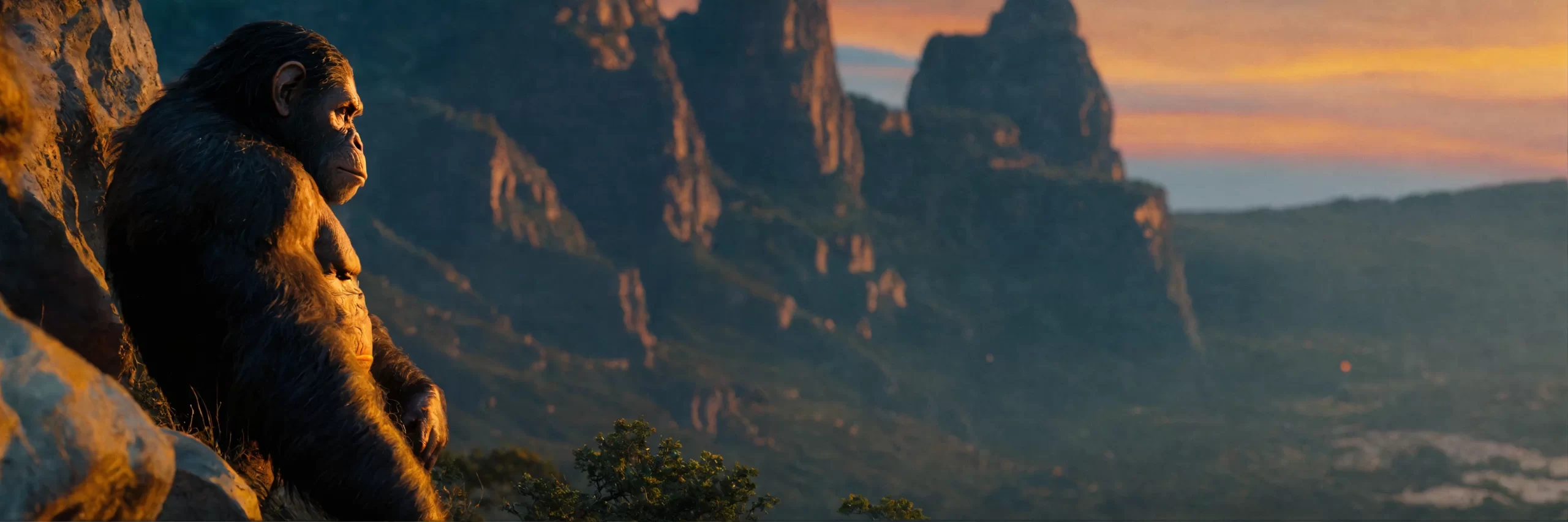
For quite a long time, one inconsistency with my understanding of the world troubled me, which I noticed in the very first film Planet of the Apes. One of the astronauts, captured by the apes during the hunt, George Taylor, retained consciousness, while the other astronaut very quickly lost his human face and began to behave like the other people of that society - like an animal.

I’ve long wanted to write about this film as a very interesting example of symbolism in cinema. And, in the context of the theme of cannibalism, I also want to discuss it as a classic portrayal of a cannibal. But I’d like to also introduce the idea of the significance of one’s self-perception.

At the moment one reaches the center, the Self, the boundaries between subject and the world of Consciousness and the Conscious mind begin to blur.
A thinning also occurs in the area of the unconscious.
The more freedom within the Self, the greater the access to Consciousness (the clarity of one’s self as a phenomenon, including within the context of society), and the purer the information that comes from the Collective Unconscious (the informational field).
In other words, the next step toward awareness is the Self emerging at the conscious level, where all the subpersonalities (archetypes) are contained within, and the Self itself stands outside, gradually dissolving into the surrounding world — into Existence.